
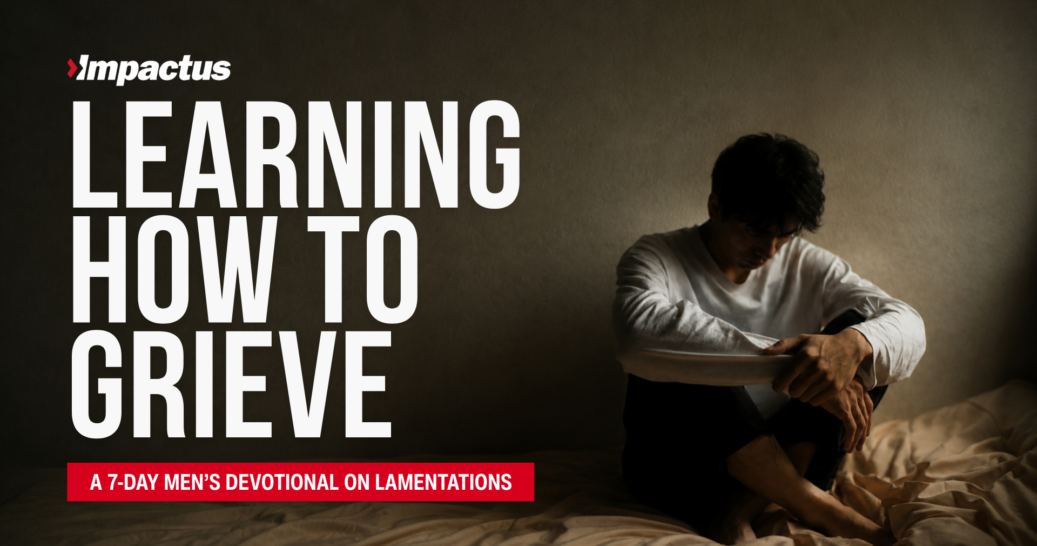
Bible Passage: “How deserted lies the city, once so full of people! How like a widow is she, who once was great among the nations! She who was queen among the provinces has now become a slave. Bitterly she weeps at night, tears are on her cheeks. Among all her lovers there is no one to comfort her. All her friends have betrayed her; they have become her enemies.” (Lamentations 1:1-2 NIV)
Scripture Reading: Lamentations 1:1-7
“Rubber-necking” is a real thing.
When I was a boy, the grain elevator in our town caught fire. My parents woke us up to go see the conflagration. It was intense. One of few vivid early childhood memories.
There are some things we can’t help but look at. They almost draw us to them, especially when they are outside ourselves, touching us in no tangible way. They are objects of fascination and rarely anything more.
But when the devastation is personal, when the twisted, smoldering wreckage is all that remains in our own lives, eyes avert. The rubber of our necks quickly and severely bends the other way.
Men are quick to observe the collapse of others. But when our own buildings topple, it would take a firm hand to force us to gaze upon that disastrous scene.
Why?
Because collapse is failure, and staring crushes our spirit. We would rather not gaze at our own demise.
Jeremiah shows us something different. Known as “The Weeping Prophet,” he proves that staring at the ruins is not simply important. It is necessary.
In the opening verses of Lamentations, Jeremiah’s eyes are drawn to the desolation of Jerusalem, destroyed because of Israel’s sin, and he cannot look away. He sees it for what it is, which allows him an honest evaluation. Honesty that makes action possible, because he takes in the devastation that failure has wrought.
Failed business, broken relationships, projects that don’t perform as anticipated, even the pettiness of a resolution unkept. These tend to turn a man’s eyes away, rather than toward.
And in looking away, we miss something important.
When men do not honestly look at failure and loss, when we do not examine the broken pieces for weaknesses that led to the failure, we miss the first and most important step to rebuilding.
Sorting through the rubble of our failures is uncomfortable. But without doing so, we will not be able to avoid the faults and fractures that led to collapse. We will not see the selfishness, pride, lust, and greed that led to the rubble at our feet.
This week, we will spend some time with the Weeping Prophet in the book of Lamentations. We will consider what it means to face our failures, recognize our responsibilities, lay out our laments, and fall on God’s faithfulness.
For men who follow God, failure is real, but the rubble is never permanent.
Prayer: God, there is much rubble in my life. Some piles are small; the heat of others bakes me even when I am looking away. Help me to look honestly at the failures in my life so that You may teach me to be more like Christ through my collapses. Thank You that failure is not the end, no matter how difficult it is to look at.
Reflection: What collapses in your life have you learned from? What collapses in your life have you yet to learn from? What questions might you bring before the Lord to show Him you are ready to face those failures so that you may not repeat them?
Copyright © 2026 Impactus. All rights reserved.
About