
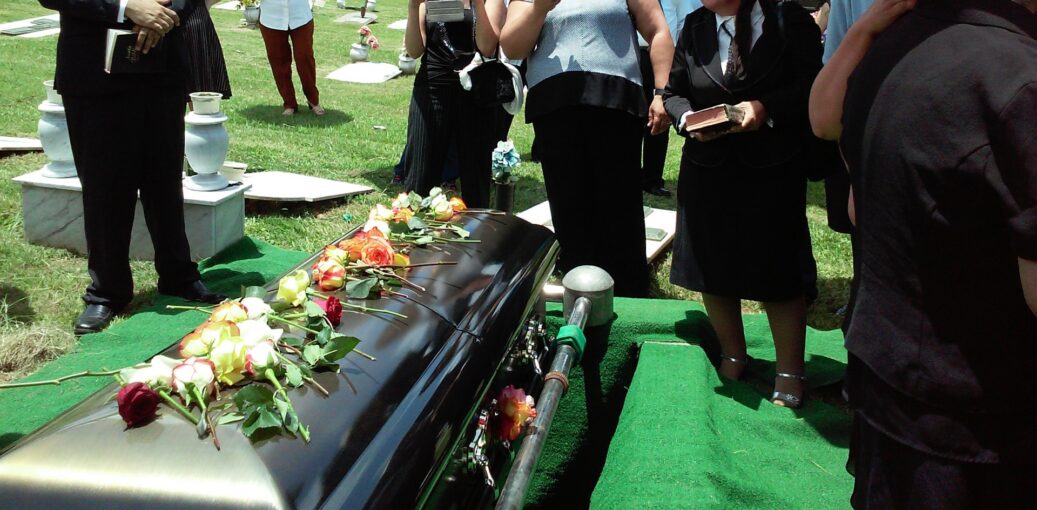
I officiated my father’s funeral.
It was one of the most difficult days of my life. I stood there in a black suit, choked up in front of my family and friends, and told the story of a very conflicted man. On the one hand, he was the best father a boy could ask for. He was always involved, cheering me on at every volleyball game, and always lending a listening ear, ready to talk. He wasn’t just willing to get involved in the details of my life; he wanted to be, and I felt it.
He is also the reason I found my way back to the Lord in my teenage years, and for that I will be eternally grateful.
And yet, the last decade of his life was a disaster.
He was an alcoholic for as long as I can remember. He had alienated nearly everyone he knew and failed to reach his 60th birthday due to a liver that waved the white flag under the unrelenting assault. That same father, whom I loved dearly, made me drive him around one summer after he lost his license on a Driving Under the Influence charge as his personal chauffeur. It was a long summer.
That funeral forced me at a very young age to think about the word “legacy.” What does it mean for a man to leave one? What wake will follow the life that we lived?
The truth is, every man leaves a legacy. It’s not a question of if, but what kind. The life you live now echoes throughout eternity in the lives and memories of the people around you. It is an awesome and sobering thought.
So how do we live a life that leaves behind a powerful legacy? How do men leave a lasting positive impact on our wives, our kids, and our coworkers?
The answer starts with thinking about your funeral.
The truth is, every man leaves a legacy. It’s not a question of if, but what kind.
The wisest man to have ever lived, second only to our Lord, was King Solomon. He wrote this a few thousand years ago, and yet it hits with the same force today:
“It is better to go to a house of mourning than to go to a house of feasting, for death is the destiny of everyone; the living should take this to heart.” (Ecclesiastes 7:2)
As counterintuitive as it sounds, Solomon says it’s better to go to a funeral than a wedding.
Why?
Because weddings rarely teach you anything, but funerals can tell you everything.
One day, people will gather around your casket, tell stories of your life, drop you in the ground, and “go back to the church to eat potato salad,” says Tony Campolo.
I think about that line often.
The question is, what stories will they tell? What things will they say? What moments will they remember? Most of the time, we think they will talk about the titles we held, but they never do. At a funeral, you hear testimonies instead.
You might be surprised by what people talk about at funerals. Listen closely the next time you attend one. John Mark Comer tells a story of a very famous and very accomplished man whom he knew in the San Francisco Bay area. You could measure his impact in the metric of millions. At this man’s funeral, John Mark assumed someone would speak about his success and international impact, yet not a single person in the entire service mentioned how much money he made or how many people he influenced. Those details were entirely absent.
His grandsons simply talked about the time they spent together fishing and the moments they shared.
This is the difference between what David Brooks calls “resume virtues” and “eulogy virtues.”
Resume virtues are what we talk about in this life, like accomplishments, visible success, and recognition. These are the metrics and the milestones, especially as men, that we’re chasing most of the hours in a day.
However, eulogy virtues are what people talk about when we die, like character, time spent with the people that matter to us, how you made them feel, and the impact you had on their lives.
In my life, it feels like these two aims are always at war with one another.
Time and energy are scarce. The hard choices in a man’s life often come in choosing between these two goals.
Do I work a few more hours this week and make a few hundred more dollars? Or do I cut out before my son’s little league game begins and go cheer him on?
Do my kids feel like they’re interrupting me when I’m working on a project at home, or like I’m glad to see them?
Does my wife hear me brag about her in the next room when I’m with my friends, or does she hear a list of all the things she makes me do?
Does my church get the best of my time, talent, and treasure? Or just what’s left over at the end of the month?
Each of these questions gets to the heart of the struggle of legacy. I feel it just as acutely as you.
Leaving a legacy means living a life that chooses eulogy virtues over resume virtues. It doesn’t mean you can’t be a successful man in this life, or make a lasting impact in your field. It doesn’t mean you can’t be passionate in your pursuit of excellence.
But it does mean more often choosing what will reverberate long after you’re gone, over what will be forgotten the day after your obituary will be written.
Leaving a legacy means living a life that chooses eulogy virtues over resume virtues.
So, how do men leave a lasting legacy?
Start by thinking of your funeral, as Solomon says.
Realize that you will leave a legacy in the lives of the people around you. What kind of legacy do you want that to be?
It might help to make a list of the resume virtues you’re chasing, and the eulogy virtues you want to pursue instead.
Get specific, then start each week with a reminder that one side of that column will evaporate in the days after your funeral, and one will live on for eternity. Stare at it every Monday morning and ask yourself, “Which column will I choose this week? What kind of legacy do I want to leave?”
That is how you finish well.
About